
Housing for all generations
…More homes for young people and downsizers in middle‑ring suburbs
The Schrinner Council’s “More Homes, Sooner” initiative will help unlock thousands of additional homes for younger buyers and downsizers in well‑serviced middle‑ring suburbs.
Building heights, parking requirements and minimum lot sizes will be updated to reduce construction costs and make it easier to deliver new homes within designated low‑medium density residential (LMR) zones.
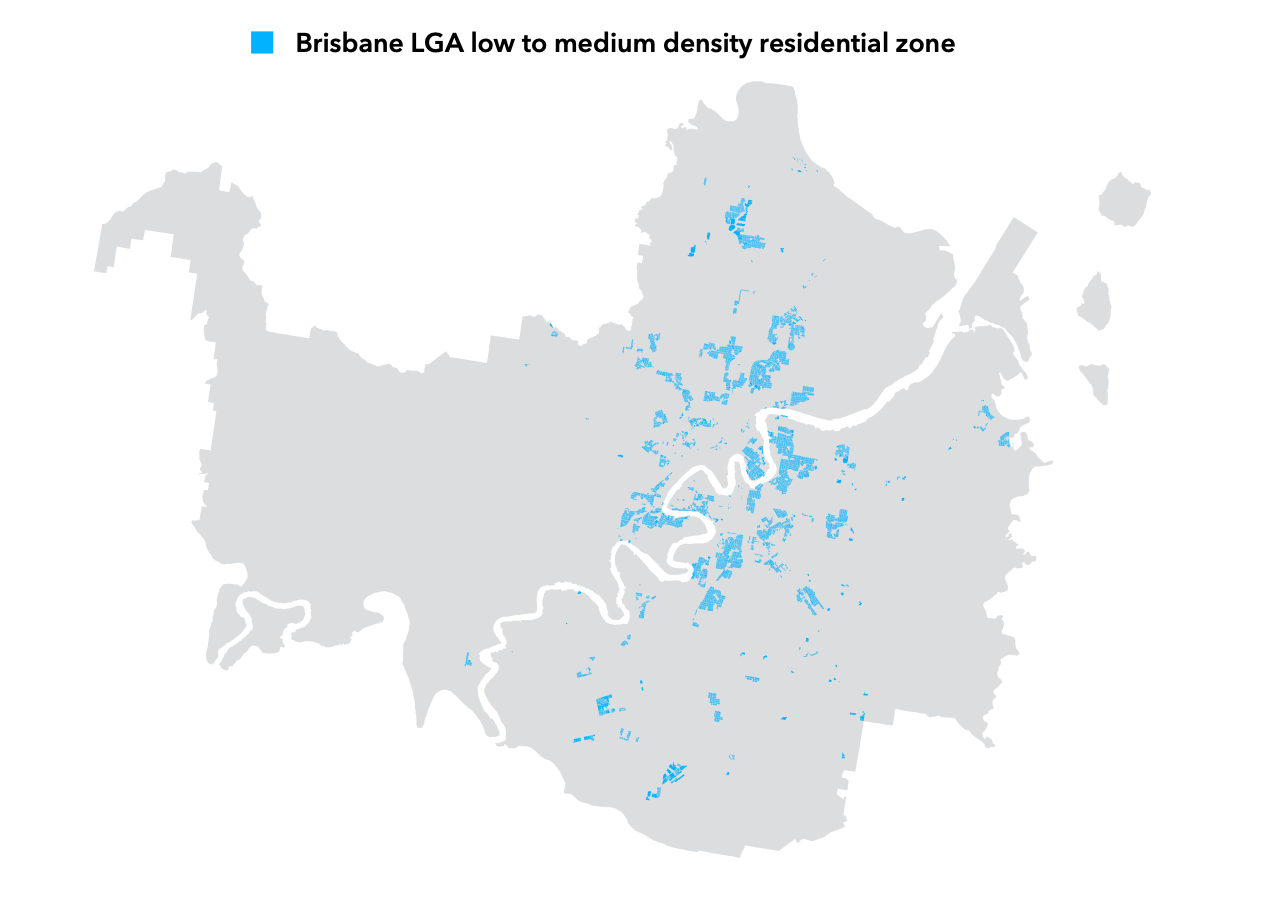
The LMR zone represents around 14 per cent of Brisbane’s residential land and includes pockets of suburbs such as Morningside, St Lucia, Moorooka and Zillmere.
Under the proposal, up to 6,000 new homes could be created by 2032, enabling more townhouses, units, apartments and row houses to be built close to public transport, shops and other essential services.
These changes form part of the Schrinner Council’s broader anti‑sprawl approach, focusing housing growth in established areas already supported by infrastructure.
Providing more housing opportunities in LMR areas is expected to benefit both younger residents seeking entry‑level homes and older residents looking to downsize.
For current homeowners, updated zoning can sometimes increase buyer interest in a property when the time eventually comes to sell or downsize, due to the wider range of development and housing options available on appropriately located sites.
Rising construction costs have created feasibility challenges for LMR developments, which has slowed the delivery of new homes. Despite strong demand, annual construction in these areas has fallen from around 1,100 homes to just 445 in 2023.
More than half of Brisbane households are made up of single people or couples, while over 70 per cent of existing homes contain three or more bedrooms, highlighting a mismatch between dwelling types and community needs.
Key proposed changes under the “More Homes, Sooner” initiative include:
- Increasing allowable building heights from 2–3 storeys to 3 storeys.
- Allowing 4 storeys on well‑located sites near frequent public transport or shops.
- Reducing minimum lot sizes from 260m² to 120m² to support more diverse housing.
- Simplifying development assessment processes for faster, clearer approvals.
At present, low‑density residential properties may be subdivided into 300m² lots if they are located within 200 metres of a shopping centre. Under the proposed changes, this distance will increase to 300 metres.
New design standards will help maintain neighbourhood character, including setbacks from detached houses, maximum building footprints and requirements for street trees.
Parking settings will also be updated to improve affordability for new homes. Parking rates will be aligned more closely with surrounding councils but will remain higher than they were under the former Labor administration. For example, mandating a second parking space can add up to $82,000 to the cost of a unit outside the inner city.
Residents can share early feedback at https://www.brisbane.qld.gov.au/building-and-planning/planning-and-design/city-plan-amendments/low-medium-density-residential-design by Friday 20th March 2026.
“Brisbane is growing fast and all levels of government need to act decisively to boost housing supply.,” said Lord Mayor Adrian Schrinner:
“We’re committed to an anti-sprawl approach that enables more homes to be built while protecting Brisbane’s incredible lifestyle and bushland areas.
“Our changes will help relieve construction cost pressures and make it easier for younger people and downsizers to find a home in well-serviced middle-ring suburbs.
“If we want young people to have a real chance at owning a home then we need to do things differently.
“Some politicians want you to believe rent freezes, higher taxes and mandatory provisions on home builders will somehow solve the housing crisis. They’re pulling your leg.
“In reality, these policies often backfire and have the opposite effect.
“House prices and rents will only stabilise when more homes are built.
“Things will not magically get cheaper if governments try to tax or bully their way out of the housing crisis.
“Instead, we must focus on increasing options and reducing cost pressures on home builders to boost supply.”
“With 96 per cent of all homes built by the private sector, governments alone can’t solve the housing crisis,” said City Planning Chair Cr Adam Allan.
“More than 600 people are moving here every week and we’re unlocking housing opportunities in well-located suburbs so builders can get on with creating more homes.
“Kickstarting the construction of new homes is the right thing to do with the limited levers Council has to help solve the housing crisis.
“These reforms are about delivering more homes, sooner and anyone who opposes them is standing in the way of more housing during a housing crisis.”
“The Institute supports the work undertaken by Council to consider proposed changes to the LMR zone, as another critical piece in the housing puzzle,” said UDIA Queensland CEO, Kirsty Chessher-Brown:
“We said at the outset of the housing crisis that it would take many initiatives and that no stone should be left unturned.
“Importantly, this means also looking at our existing suburbs in light of an evolving and growing city to see how we might be able to accommodate greater levels of housing diversity, with the ultimate aim of providing changes to facilitate people being able to find a home in a place that they want to live, at a price they can afford.”
“Increasing building height and adjusting the minimum car parking rate will directly assist the industry in tackling the key challenge for small infill residential projects: commercial viability,” said HIA Executive Director QLD Michael Roberts.
“It’s pleasing to see Council recognise that reducing the minimum lot size is a key step in increasing housing choice and a proven way to reduce the cost of new housing.
“These suite of planning reforms will assist industry in constructing smaller, more affordable dwellings, which are often the entry point for first homebuyers and vital for downsizing seniors.
“These changes are a positive step and set a great example for how Local Governments can contribute to addressing housing supply and affordability challenges”.
“We’ve been looking for two years, but buying feels impossible and even rent is getting out of control, ” said first home buyer and Moggill renter Emily Heysen:
“I work in aged care and see so many older people stuck in big homes they don’t need because there are no smaller options for them.
“These kinds of incentives are really appreciated, because any sort of help towards the housing crisis is a good thing.
“Anything that helps make homes more affordable and gives first-home buyers or older residents more options makes a big difference.”
Proposed citywide parking rates, outside the City Core and City Frame areas:
| Home size | Current Multiple Dwelling rate | Proposed City Wide | Proposed Key Location* |
| 1 bedroom | 1 | 1 | 1 |
| 2 bedroom | 2 | 1.5 | 1.2 |
| 3 bedroom | 2 | 2 | 1.6 |
| 4 bedroom+ | 2.5 | 2.5 | 2.0 |
| Visitor | 0.25 | 0.25 | 0.25 |
*Key locations can be within 400 metres walking distance to high-frequency public transport or a centre, and must have a sustainable travel plan.
Comparative low-medium density residential parking rates in other council areas:
| Dwelling size | Gold Coast | Moreton Bay | Ipswich | Logan | Sunshine | Cairns | ||
| 1 bedroom | 1 | 1 | 1 | 1.5 | 1 | 1.25 | ||
| 2 bedroom | 1.25 | 1.25 | 1.5 | 2 | 1.25 | 1.25 | ||
| 3 bedroom | 1.5 | 1.5 | 2 | 2 | 1.5 | 1.75 | ||
| 4 bedroom+ | 2 | 2 | 2 | 2 | 2 | 1.75 | ||
| Visitor | 0.1 | 0.25 | 0.25 | 0.25 | 0.25 | 0.25 |